Guillotining Services
Steel Guillotining
The term “guillotine” dates back to the French Revolution, when Dr. Joseph-Ignace Guillotin proposed a faster and more humane alternative to executions with swords or axes. Together with Dr. Antoine Louis, he helped design the first prototype. Ironically, Guillotin himself disliked the association with his name, but history ensured it stayed.
Today, guillotines are no longer used for executions — but the name lives on in the steel industry.
What is a Steel Guillotine?
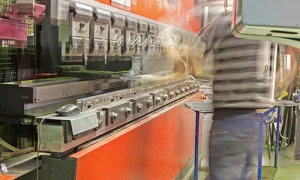
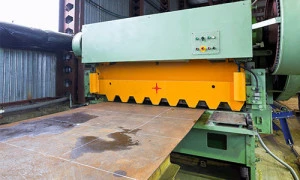
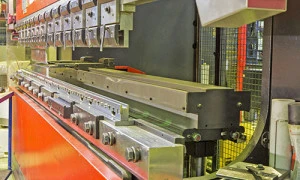
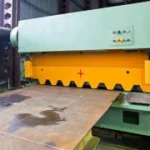
Also known as a power shear or squaring shear, a steel guillotine is a machine used to cut sheet and plate with precision. It minimises off-cuts, saves labour, and delivers consistent, high-quality results. Depending on the design, it can be foot-operated, mechanically driven, or powered hydraulically for maximum efficiency.
Key Advantages
- High shearing accuracy for a precise cut
- Flexibility – capable of cutting sheets from ±1.5mm up to 16mm thick, and up to three metres wide
- Strength & durability – resistant to deflection and torsion forces
- Cost-effectiveness – reduced waste and faster production
How It Works
A steel guillotine uses a powered drive system to move the cutting blade downward in a near-parallel motion to the fixed blade. A gibbing system ensures alignment, keeping both blades in position throughout the stroke for a clean, accurate cut.
Types of Guillotines
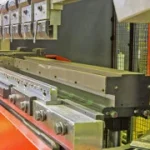
Different guillotine machines are available, depending on the material type, length, and thickness. Some models feature a variable rake angle, which can be adjusted to suit different cutting needs. Choosing the right machine depends on your specific requirements.