Ring Rolling Services
Ring Rolling: Precision, Strength and Efficiency
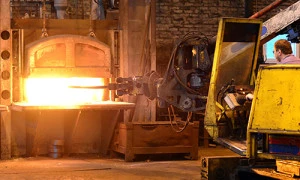
In the past, ring rolling was a manual, highly skilled process where operators had to rely on experience to manipulate levers and carefully manage each rolling cycle.
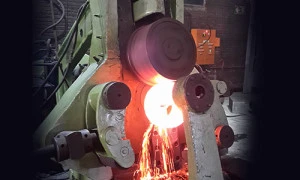
Today, thanks to modern hydraulics and computerised control systems, the process is fully automated. Radial-axial rolling machines can be programmed to deliver consistent, high-quality results, whether working with materials at elevated or ambient temperatures.
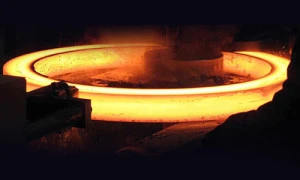
The principle is straightforward: two rollers – one idle and one driven – expand a smaller diameter preform into a larger, thinner ring. Additional edging rollers are often used to maintain precise width and accuracy throughout the operation.
Key advantages of ring rolling include:
- Seamless rings with superior structural integrity
- Material efficiency, with up to 95% of the starting material retained
- Low-cost, fast setup with minimal machining required
- Enhanced strength due to continuous grain flow
Because of these benefits, seamless rolled rings are widely used in aerospace, turbines, bearings, pipes, pressure vessels and heavy machinery. Sizes range from small washer-like rings to cylindrical components up to three metres high, offering versatility across many industries.